 NorCloud login

Building Acoustic
Sound Insulation Measurements in Buildings
Building acoustics focuses on how sound behaves within rooms and how it passes through walls, floors, and façades. Robust acoustic performance is essential for occupant comfort, a clear indication of construction quality, and demonstrable compliance with national and international standards.
.webp?width=664&height=664&name=BuildingAcousticsImage(664x664px).webp)

.webp?width=1824&height=2736&name=Norsonic_v2-64-(1824x2736px).webp)
Standardised acoustic measurements
Across residential, commercial, and industrial projects, standardised acoustic measurements provide verifiable evidence of how effectively building elements control noise transmission between neighbouring spaces, from external sound sources into the building, and from structure-borne impacts such as footsteps, and machinery.
What is evaluated in building acoustics?
Building acoustics measurements address how sound:
-
Is transmitted within and between rooms
-
Passes through building elements between adjacent spaces
-
Enters buildings from outdoor sources
The purpose is to deliver reliable, standardised data on the acoustic performance of walls, floors, façades, and other structural elements, providing a clear basis for design validation, compliance, and quality assurance.
Measurement accuracy and standard compliance

Reliable building acoustics testing requires Class 1 instrumentation compliant with IEC 61672.
Frequency analysis in octave and one-third octave bands must comply with IEC 61260, while reverberation time measurements are typically performed according to ISO 3382.
Field and laboratory sound insulation measurements are conducted in accordance with ISO 16283 and ISO 10140.
.webp?width=664&height=664&name=BuildingAcoustics283664x664px).webp)
Airborne sound insulation
Assessment of sound transmitted through the air between adjacent rooms. Read more...
/Nor277-Tapping-machine-white-(349x326px).webp?width=349&height=326&name=Nor277-Tapping-machine-white-(349x326px).webp)
Impact sound insulation
Reliable noise monitoring with sound Assessment of structure-borne sound generated by mechanical excitation, such as footsteps on floors. Read more...
/Noise%20sources%20white%20webp%20(664x664px)/Nor286-origiami-white-(664x664px).webp?width=664&height=664&name=Nor286-origiami-white-(664x664px).webp)
Solutions for building acoustics measurements
Professional building acoustics testing requires:
-
Class 1 sound level meters
-
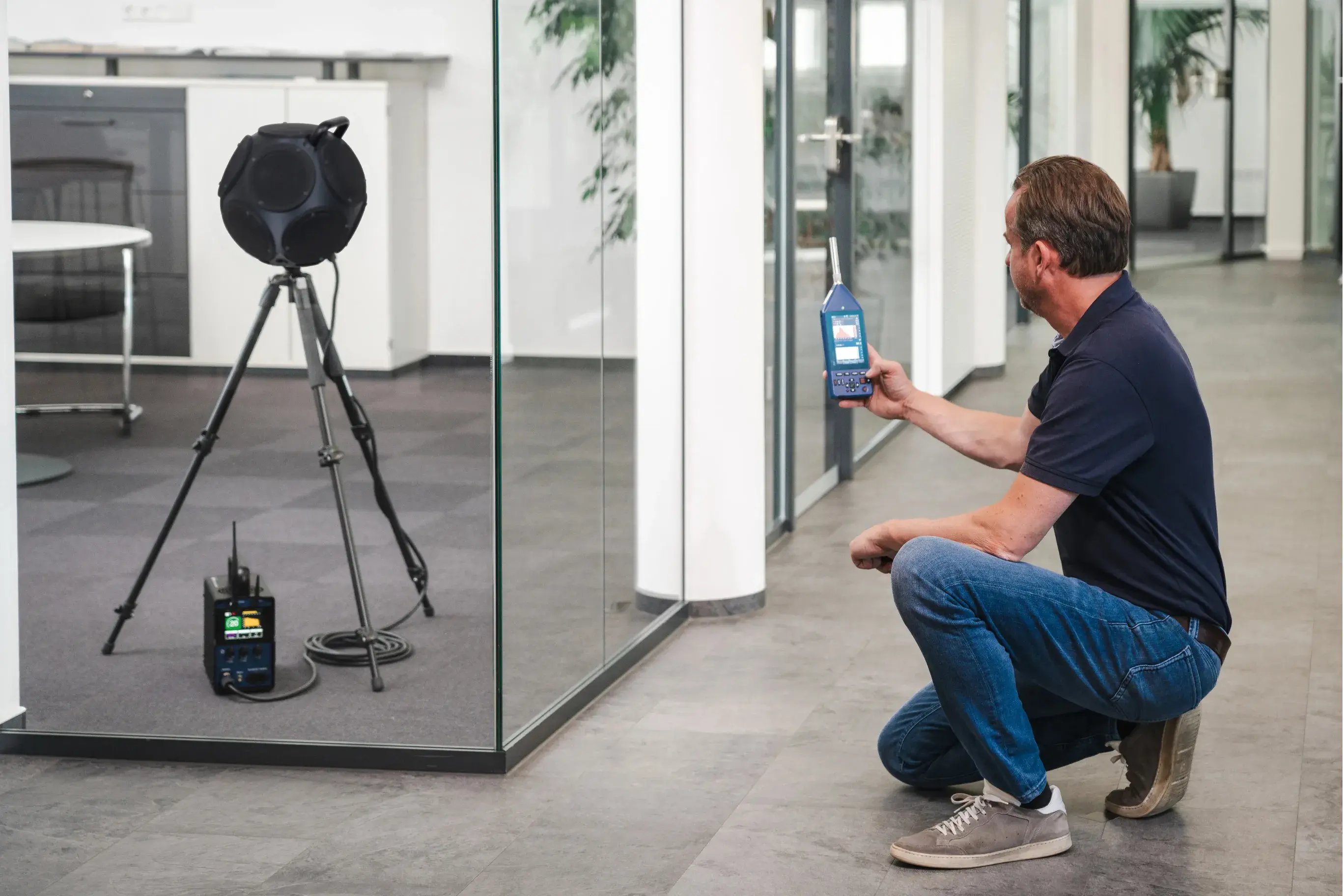
Omnidirectional sound sources for airborne testing
-
Standardized tapping machines for impact testing
-
Reverberation time measurement capabilities
-
Acoustic calibrators
Complete and integrated measurement systems ensure compliance, repeatability, and efficient reporting in building acoustics applications.
.webp?width=2736&height=1824&name=Norsonic_v2-35-(2736x1824px).webp)
Norsonic - a trusted and innovative leader in building acoustics applications
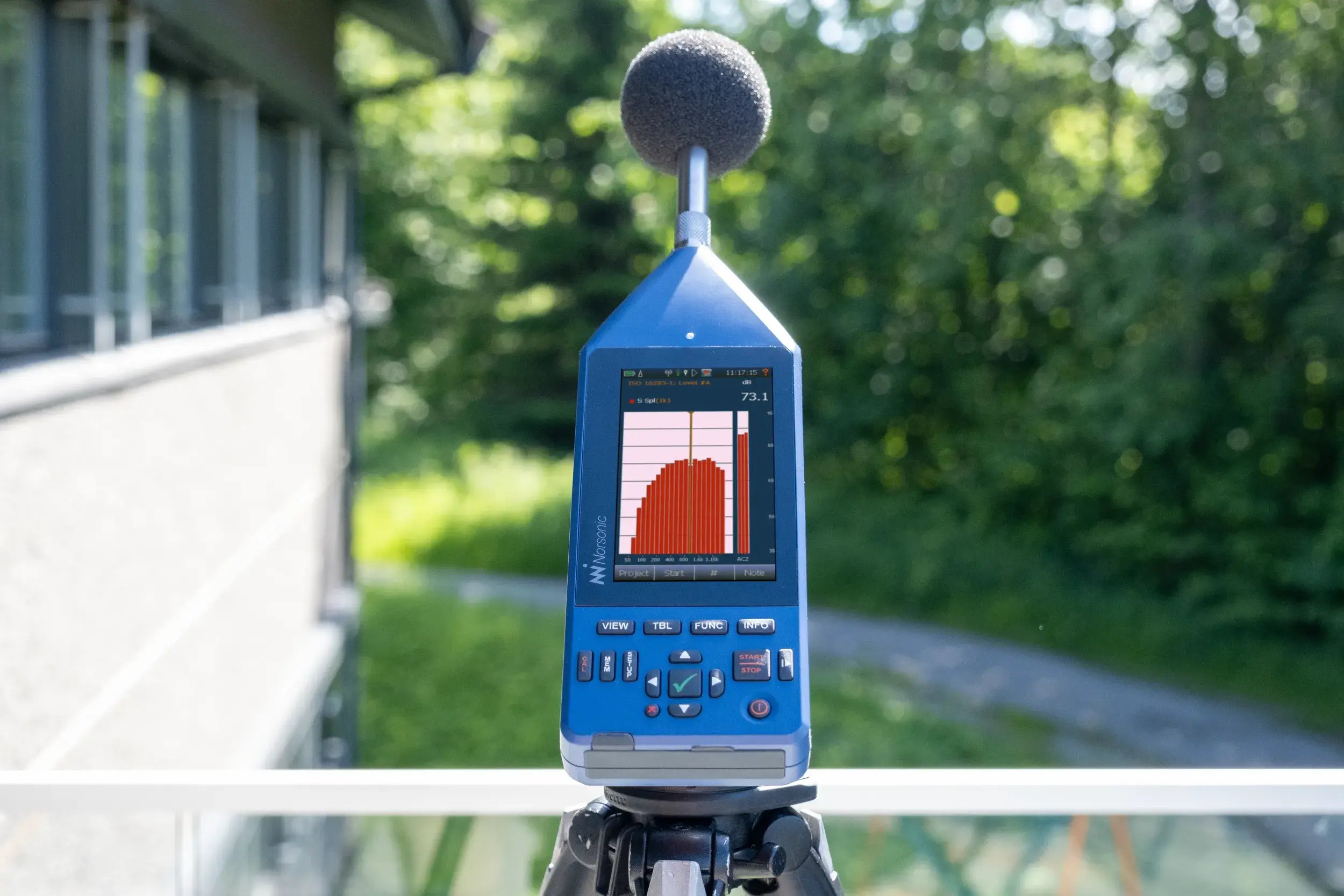
Norsonic delivers a comprehensive portfolio of instruments and systems dedicated to building acoustics. From handheld sound level meters to advanced multichannel solutions, our technology is engineered to meet the full range of acoustic measurement tasks, from basic sound insulation tests to complex analyses.
Intuitive software, flexible configuration, and powerful analysis tools provide efficient workflows and clear, reproducible reporting. Wireless operation and Wi-Fi connectivity reduce cabling and simplify logistics on site, while project management directly on the instrument helps optimise measurement campaigns and ensure consistent, reliable results.


