 NorCloud login


/Nor150-sound-inensity-jorge(800x800px).webp?width=800&height=800&name=Nor150-sound-inensity-jorge(800x800px).webp)
.webp?width=1824&height=2736&name=Norsonic_v2-74-(1824x2736px).webp)
/NorCloud%20wite%20(664x664px)/NorCloud-NoiseCompass-PC.webp?width=450&height=325&name=NorCloud-NoiseCompass-PC.webp)
/Misc%20white%20(664x664px)/Nor1545-white-(664x664px).webp?width=450&height=325&name=Nor1545-white-(664x664px).webp)
/Nor145%20white%20webp%20(664x664px)/Nor145-ENV-white-(664x664px).webp?width=450&height=325&name=Nor145-ENV-white-(664x664px).webp)
/Outdoor%20microphones%20white%20webp%20(664x664px)/Nor1217-white-(664x664px).webp?width=450&height=325&name=Nor1217-white-(664x664px).webp)
/Nor286-Origami/Nor286-origami-light-blue-800x600px.webp?width=450&height=275&name=Nor286-origami-light-blue-800x600px.webp)
How reusable is an Origami Impulse Source for reverberation time measurements?

/Outdoor%20microphones%20white%20webp%20(664x664px)/Nor1297-noise-compass-white-(664x664px).webp?width=664&height=664&name=Nor1297-noise-compass-white-(664x664px).webp)
/Outdoor%20microphones%20white%20webp%20(664x664px)/Nor1297-noise-compass-all-parts-white-(664x664px).webp?width=664&height=664&name=Nor1297-noise-compass-all-parts-white-(664x664px).webp)
/Outdoor%20microphones%20white%20webp%20(664x664px)/Nor1297-noise-compass-lower-part-white-(664x664px).webp?width=664&height=664&name=Nor1297-noise-compass-lower-part-white-(664x664px).webp)
Norsonic was among the first to integrate sound recording of noise events directly into a sound level meter. This innovation made it significantly easier to identify individual noise events and decide whether they should be excluded from the overall noise assessment. However, manually listening through large volumes of recordings remains a time‑consuming and subjective task for noise consultants, environmental engineers, and compliance teams.
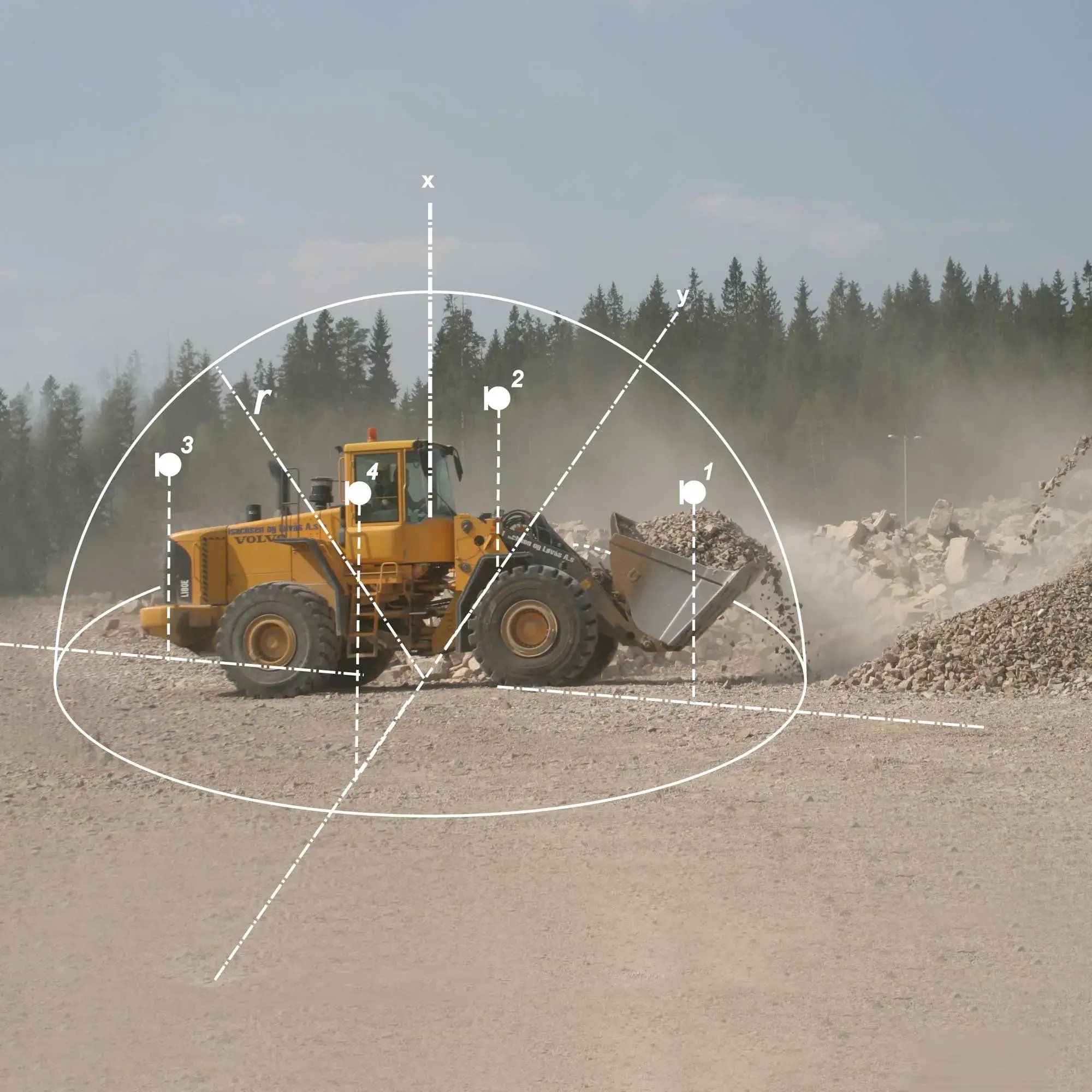
The three-dimensional Nor1297 Noise Compass streamlines this assessment process by helping you determine, with high confidence, whether a noise source should be included in the overall calculation – simply by identifying the direction from which the sound originates. Its sound localisation mechanism is based on the time difference of arrival (TDOA) between signals captured by the microphones integrated in the instrument.
When combined with Norsonic sound level meters and NorCloud, the Nor1297 provides a three-dimensional vector that points directly to the dominant sound source. This supports more objective, repeatable noise assessments and clearer documentation for regulatory compliance.
The system can also operate offline, storing measurement data on the instrument’s SD card for subsequent analysis in NorReview. This enables flexible workflows in the field and detailed post-processing in the office, without compromising data quality or traceability.
/Outdoor%20microphones%20white%20webp%20(664x664px)/Noisemonotoring-Paris-2-white-(664x664px).webp?width=664&height=664&name=Noisemonotoring-Paris-2-white-(664x664px).webp)
Use a Norsonic sound level meter or noise monitoring station to measure the sound pressure level at your site, following the established procedures your team already uses.
Add the Noise Compass to your setup and measure the direction of the dominant noise source, in all three dimensions.
With the Noise Compass, you can define a region of interest and automatically mark and filter out noise sources outside this area. Typical external contributors such as nearby railways or passing aircraft can be detected by direction alone, reducing the need to listen to recordings and shortening assessment time.
Noise arriving from directions outside your defined site boundary can be automatically flagged and excluded from the calculation. The result is Leq or Lden values based solely on noise sources belonging to your site, supporting clearer documentation and regulatory compliance.
.webp?width=2736&height=1824&name=Image-4-(2736x1824px).webp)
.webp?width=2736&height=1824&name=Image-8-(2736x1824px).webp)
.webp?width=2736&height=1824&name=Image-7-(2736x1824px).webp)
The noise is preprocessed with A-filters.
The Noise compass delivers data ten times a second.
Directional data is exponentially smoothed in time to provide high precision indication.
The Noise compass also handles impulsive sounds down to 10 ms duration.
The Noise compass provides a quality indicator to avoid false detection.
An array of 8 MEMS microphones ensures full 3D sound incident detection.
The unit receives power and sends data to Nor145 and Nor150 via a single ethernet cable.
The unit is fully weather protected for harsh outdoor monitoring.
Fits all existing outdoor microphones. The Noise Compass simply adds inn below the mic assembly.
Horizontal angle range: 0 to 360 degrees
Vertical angle range: – 90 to 90 degrees
Sound pressure level range: 40 to 123 dB SPL re. 20 µPa
Operating conditions: Free-field
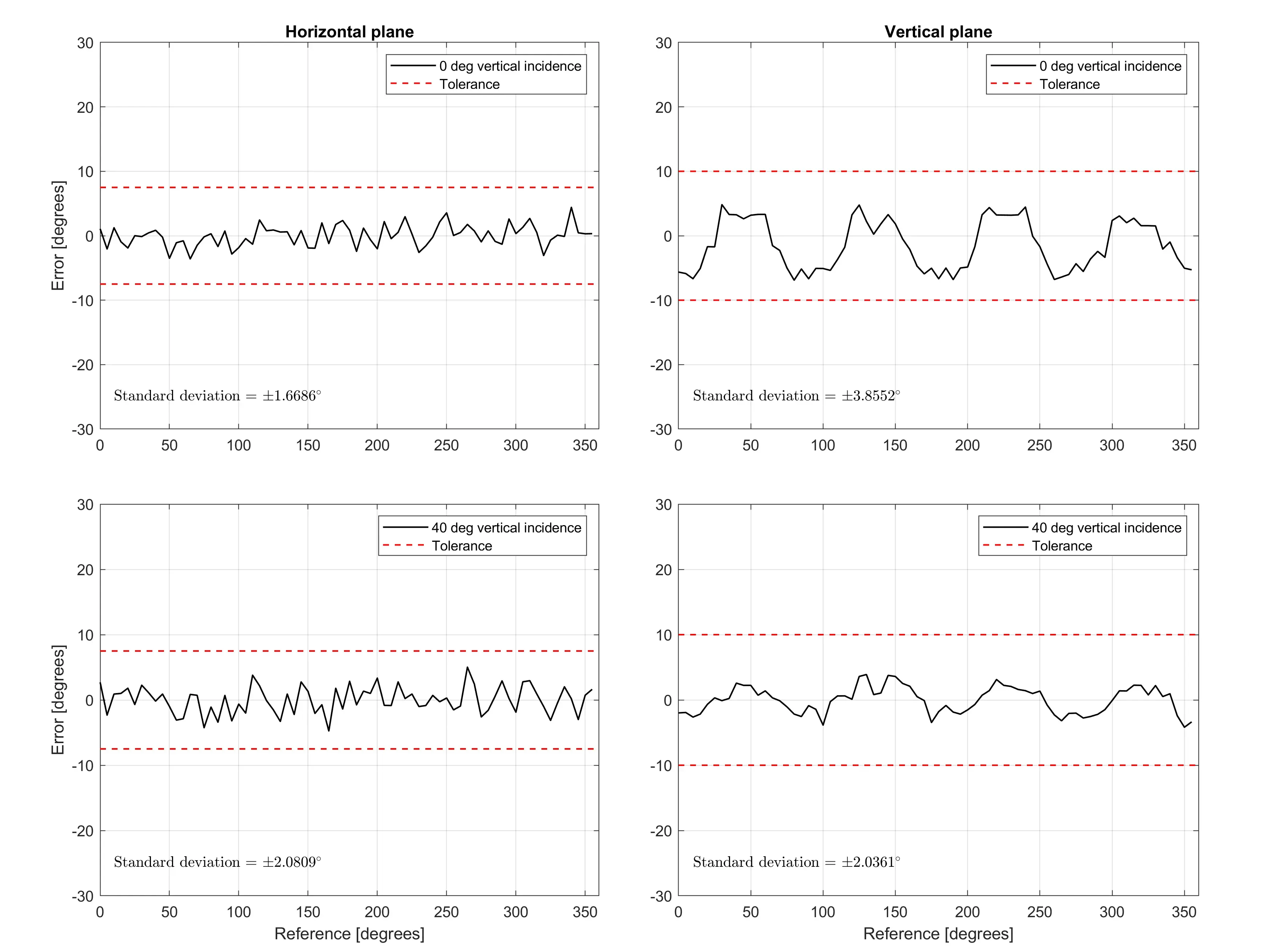
Horizontal accuracy: ± 7.5 deg. , std. dev. typ. 2.0 deg.
Vertical accuracy: ± 10 deg. , std. dev. typ. 4.0 deg.
Calibration: Factory calibrated with certificate
Operation principle: Multi-correlation
Time resolution: 100 ms
Filtering: A-weighting
Time averaging: Exponential time and 10 ms max
Instrument compatibility: Nor145 and Nor150
Software compatibility: NorCloud and NorReview
Mounting: Nor1216 and Nor1217 compatible
Ingress protection: IP55
Connectivity: Ethernet 100 mbps
Power supply: 5V to 15 V passive power-over-ethernet
Nor1297 calibration results – Typical performance and measurement uncertainty
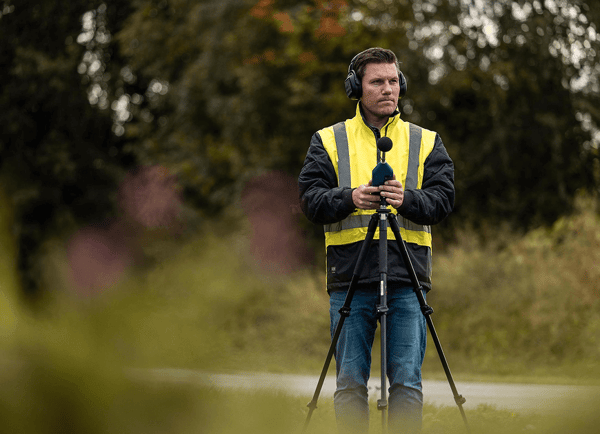
Reliable noise monitoring with sound level meter, stand-alone terminals or large-scale systems.
.webp?width=1824&height=2736&name=Image-107-(1824x2736px).webp)
Building acoustic is about the sound that travels between rooms - something you'd rather avoid.


.webp?width=450&height=275&name=NoiseTag-in-NorCloud-round-corners(1200x850px).webp)